

A seasonal maintenance checklist for keeping East Bay gardens healthy after installation, from irrigation checks to pruning and mulch refreshes.
A landscape installation is only the beginning. The way a garden is maintained after planting determines whether it grows into the design or slowly drifts away from it. In Walnut Creek, Lafayette, and surrounding Contra Costa County communities, maintenance has to account for dry summers, winter rain, fast spring growth, and the different needs of new and established plants.
A good maintenance program is not just mowing and cleanup. It is observation, adjustment, and steady care.
Check Irrigation Before Heat Arrives
Irrigation should be inspected before the hottest stretch of the year. Look for broken heads, clogged drip emitters, overspray onto pavement, dry spots, and soggy areas that may point to leaks or poor drainage. A small irrigation issue in spring can become a damaged planting bed in July.
New landscapes deserve extra attention. Plants that were installed recently may need more consistent watering while they establish, while older plants may prefer deeper, less frequent watering. If both are on the same irrigation zone, the schedule may need adjustment.
Watch Plant Health, Not Just Plant Size
Pruning should support plant health and shape, not simply make every shrub smaller. Over-shearing can create woody, stressed plants and a flat look across the yard. Selective pruning helps preserve natural form, improve airflow, and keep plants from crowding walkways or windows.
During routine visits, look for yellowing leaves, wilting, dieback, pest pressure, and signs that plants are getting too much or too little water. Early fixes are usually simpler than replacing established plants later.
Refresh Mulch Where Soil Is Exposed
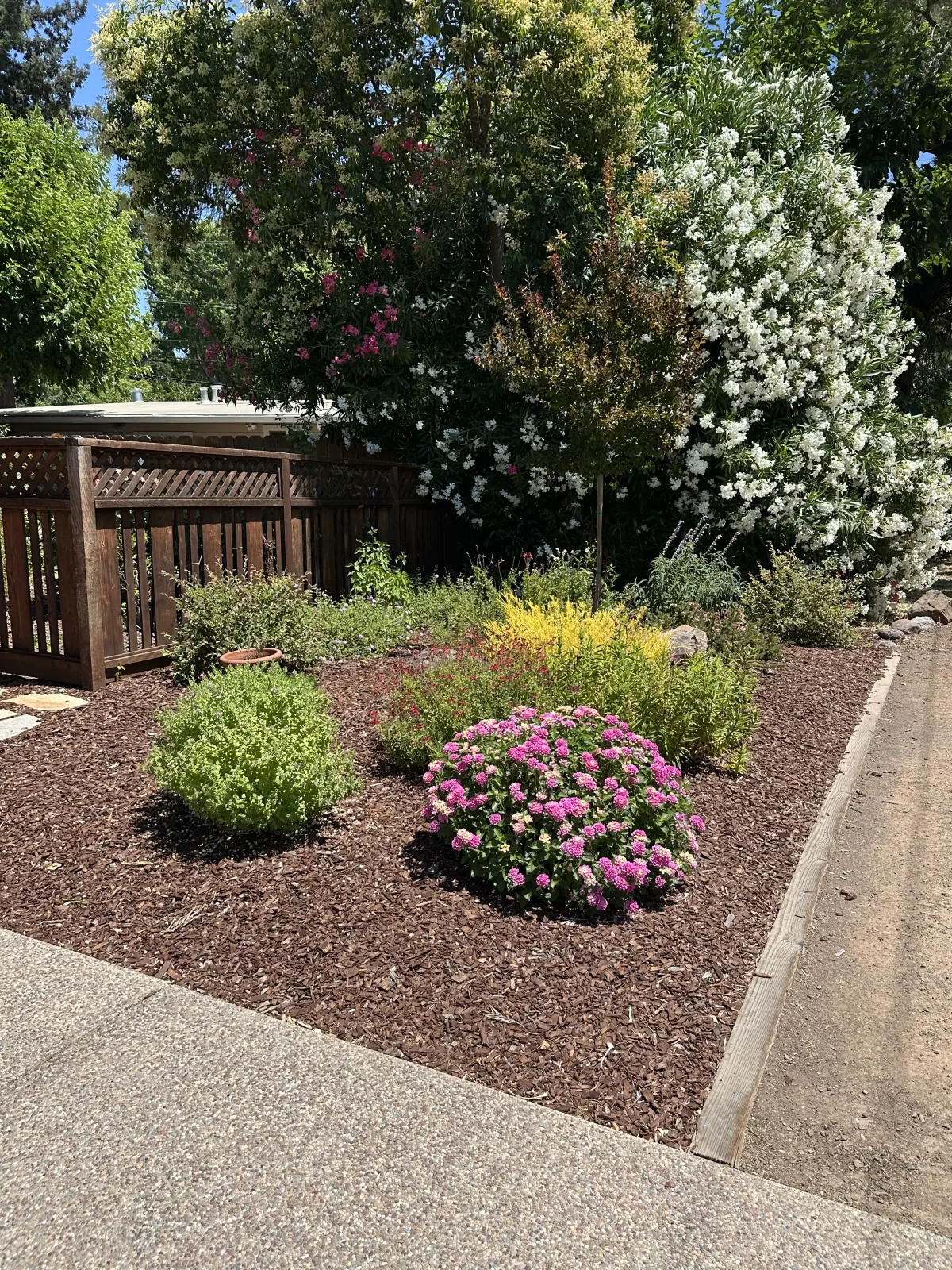
Mulch breaks down over time, which is useful for soil health but means it needs refreshing. Exposed soil dries faster, invites weeds, and can make planting beds look unfinished. A consistent mulch layer helps the garden look clean while protecting roots.
Pay attention to slopes and edges where mulch can migrate. Keep mulch away from direct contact with trunks and crowns, and avoid piling it too deeply around young plants.
Keep Edges and Access Clear
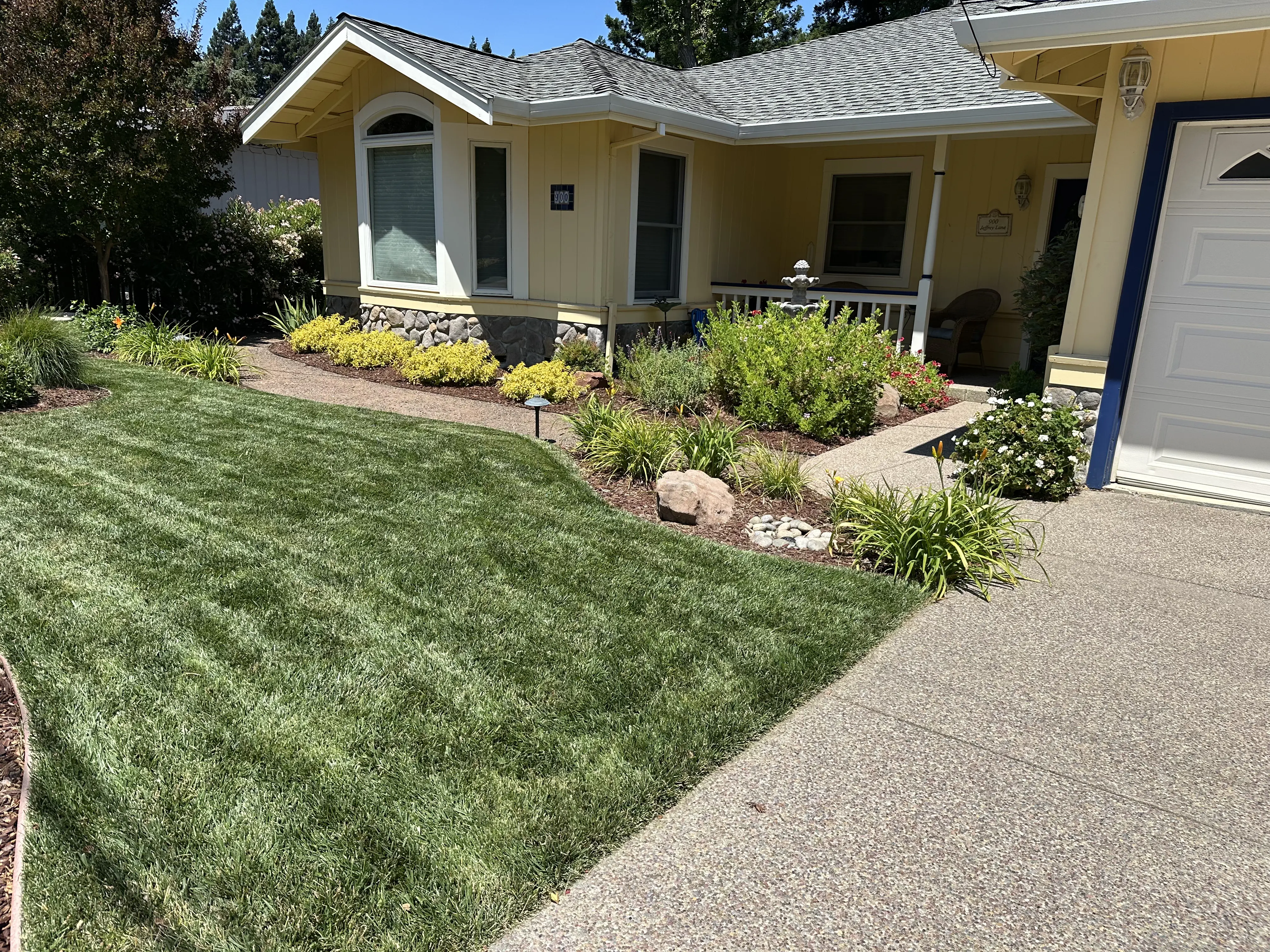
Clean edges make a landscape feel maintained even when the planting style is natural. Walkways, patios, driveways, gates, irrigation boxes, and service areas should stay accessible. This is especially important in established gardens where plants can slowly overtake circulation paths.
For front yards, clear edges also improve curb appeal. A maintained entry path, shaped planting beds, and healthy focal plants do more for the property than constant heavy pruning.
Adjust Seasonally
Maintenance should change with the season. Spring often calls for growth management, weed control, and irrigation testing. Summer focuses on water performance, plant stress, and keeping outdoor spaces usable. Fall is a good time to refresh mulch, plant, and prepare drainage before winter rain. Winter can be used for structural pruning, cleanup, and planning improvements.
The exact cadence depends on the property. Some homes need weekly care. Others do well with bi-weekly or quarterly maintenance tied to plant health and seasonal tasks.
Protect the Original Design
The best maintenance keeps the design visible. If a landscape was built with layered planting, drought-smart beds, turf, stone work, or vegetable boxes, maintenance should reinforce those choices. That means replacing failed plants with appropriate selections, keeping irrigation matched to the planting plan, and making sure fast-growing plants do not dominate slower ones.
For Walnut Creek, Lafayette, and nearby East Bay homes, a maintenance checklist is really a way to protect the investment already in the ground. When the work is consistent, the garden has a better chance to mature into the landscape it was meant to become.