
How Contra Costa County homeowners can choose resilient plants, mulch, irrigation, and layout strategies for attractive low-water landscapes.
Drought-smart landscaping is not the same as stripping a yard down to gravel. In Contra Costa County, a good low-water garden can still have texture, shade, seasonal color, and a sense of welcome. The difference is that every choice has a job: the right plant in the right place, irrigation that reaches the root zone, and soil protection that helps the landscape hold moisture.
For many East Bay homes, the goal is not a zero-maintenance yard. The better goal is a resilient landscape that uses water carefully and still feels like a garden.
Start With Sun, Soil, and Wildlife
Before choosing plants, study the site. A Lafayette hillside, a shaded Orinda side yard, and a hot Concord front yard may all need different solutions. Sun exposure, reflected heat, slope, soil condition, and local wildlife pressure can change what will thrive.
This is why plant selection should not come from a generic list alone. The same plant can behave differently depending on drainage, afternoon heat, and how much competition it has from nearby trees. In many Contra Costa County yards, deer and other wildlife also influence what belongs near the front of a planting plan.
Use Layers Instead of Isolated Plants
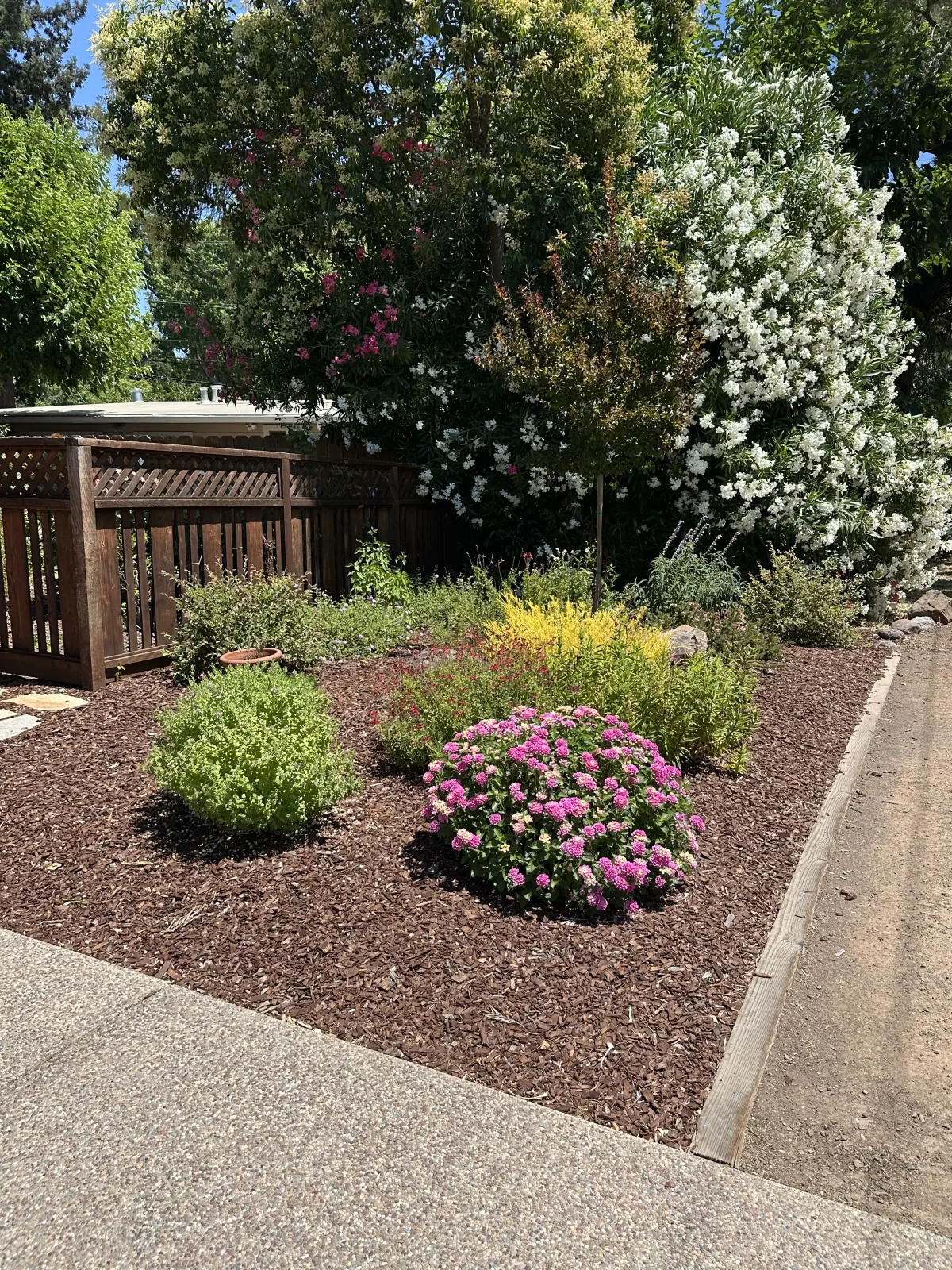
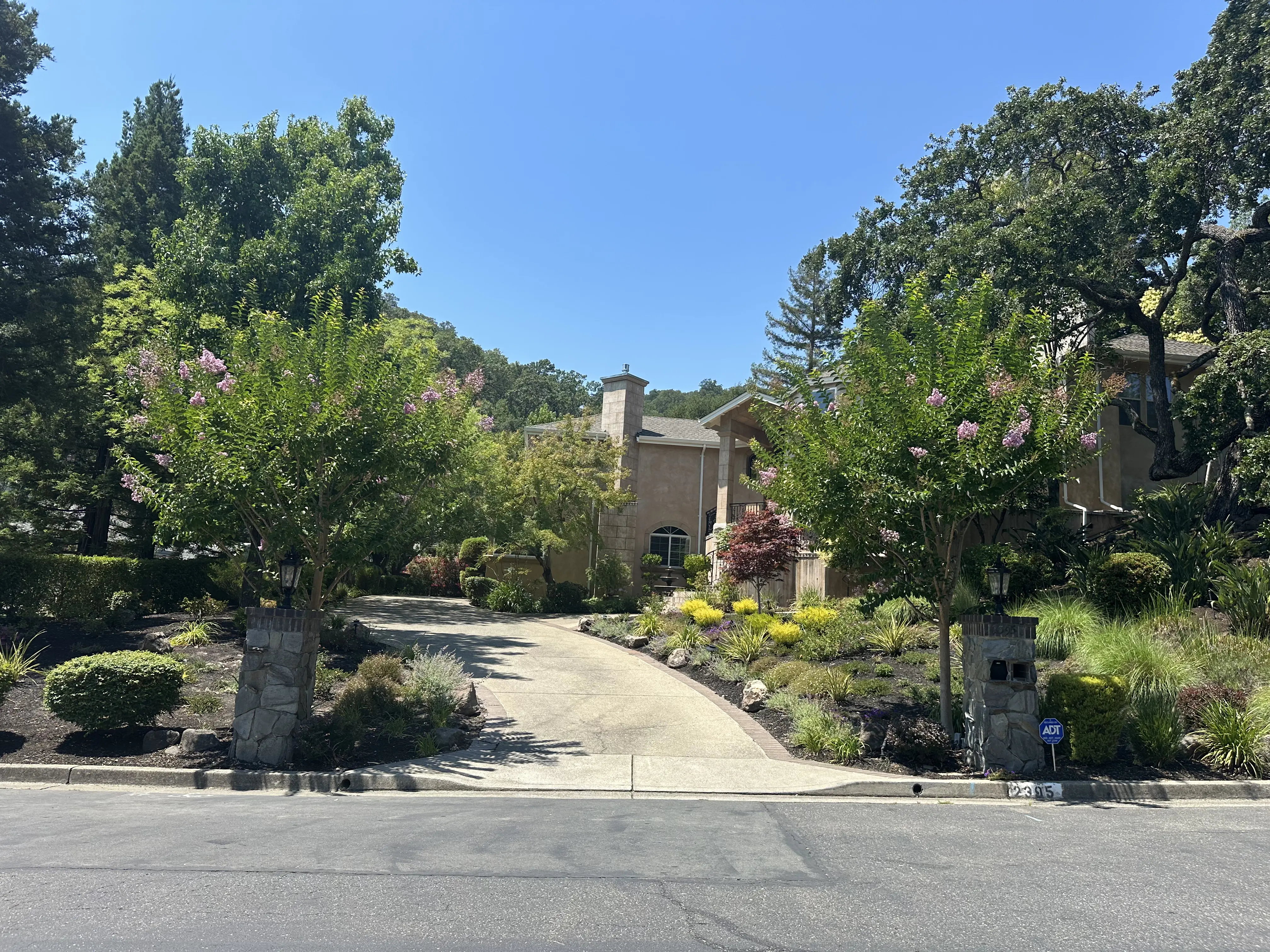
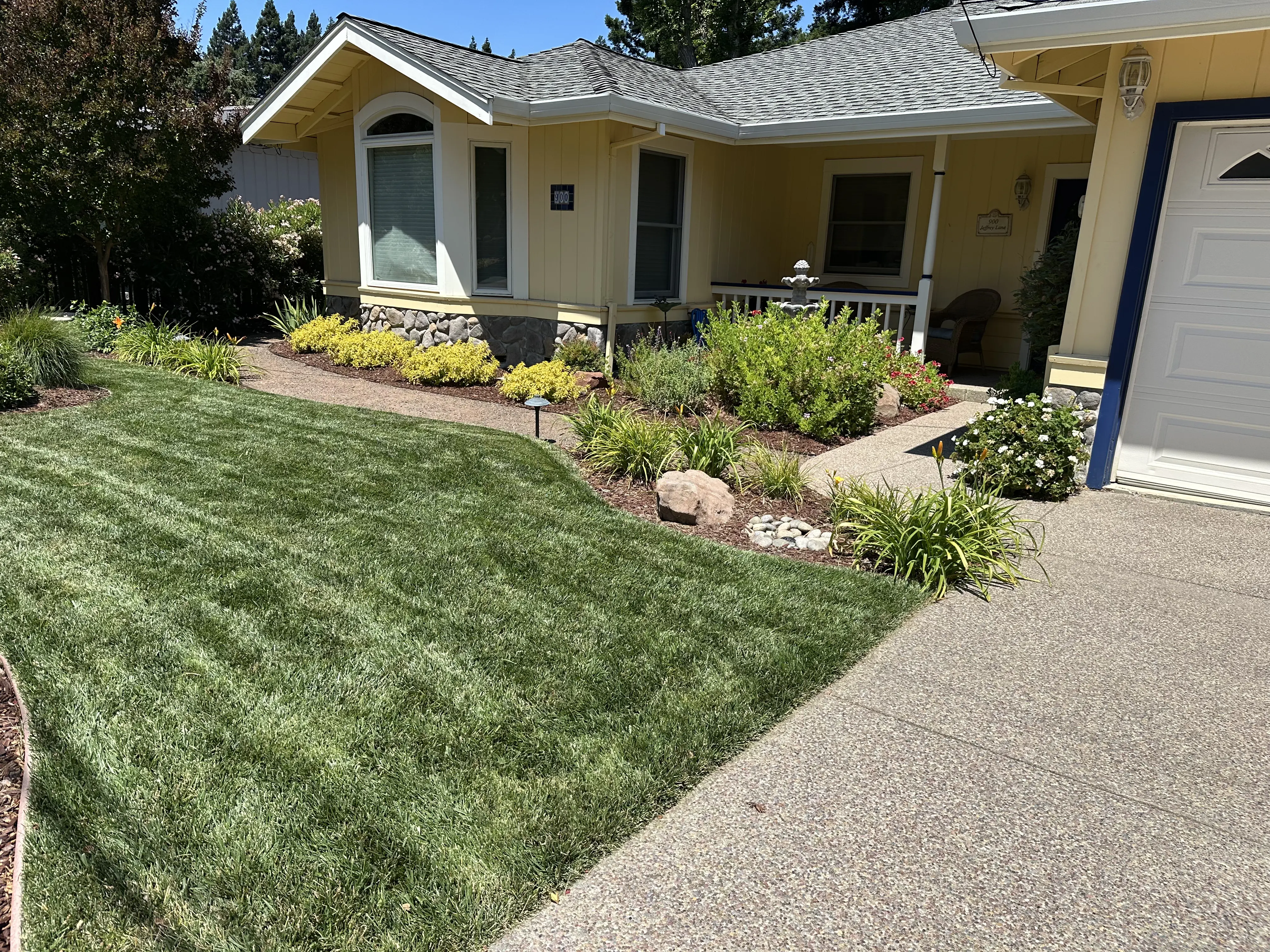
A drought-smart garden works best when plants are layered. Taller background shrubs give structure. Mid-height plants create volume. Groundcovers and mulch protect the soil. This combination looks more finished than scattered individual plants, and it helps reduce exposed soil that dries out quickly.
Layering also makes a landscape easier to maintain. When plants are grouped by water needs and growth habits, irrigation can be adjusted more accurately. Beds look intentional as they mature instead of becoming a patchwork of plants fighting for attention.
Mulch Is Part of the Design
Mulch is not just a finishing touch. It helps moderate soil temperature, reduce evaporation, limit weeds, and protect new planting areas while roots establish. In a low-water landscape, mulch can be one of the simplest ways to improve plant performance.
The right mulch depth matters. Too little will not protect the soil. Too much against trunks or crowns can create problems. A clean, consistent layer around planting areas usually gives the best balance of appearance and function.
Irrigation Still Matters in a Low-Water Yard
Drought-tolerant does not mean no water, especially during establishment. New plants need consistent irrigation while roots develop. After that, the schedule can often be reduced, but only if the system is reaching the right areas.
Drip irrigation, properly placed emitters, and routine irrigation checks are important. Overspray, broken lines, clogged emitters, and poor coverage can damage a landscape even when the plant list is well chosen. A water-wise yard depends on the system beneath it.
Keep Some Green Where It Counts
Not every yard needs a large lawn, but some green space can still be valuable. A small area of turf, a soft groundcover, or a shaded planting bed can make the yard feel comfortable and usable. The key is to place higher-water elements only where they earn their keep.
Front entries, small play spaces, and gathering areas are often better candidates than unused side strips or steep slopes. A thoughtful design can reduce water use without making the property feel bare.
Plan for the Mature Garden
The best drought-smart landscapes are designed for year three, not just week three. Give plants room to reach their mature size. Avoid crowding young plants just to make the first season look full. Use structure, mulch, and a few well-placed focal points to carry the design while the garden fills in.
For Contra Costa County homeowners, drought-smart planting is really about fit. Choose plants that match the site, group them intelligently, support them with irrigation and mulch, and maintain them before stress becomes obvious. That approach creates a landscape that can handle East Bay summers while still feeling personal and cared for.