
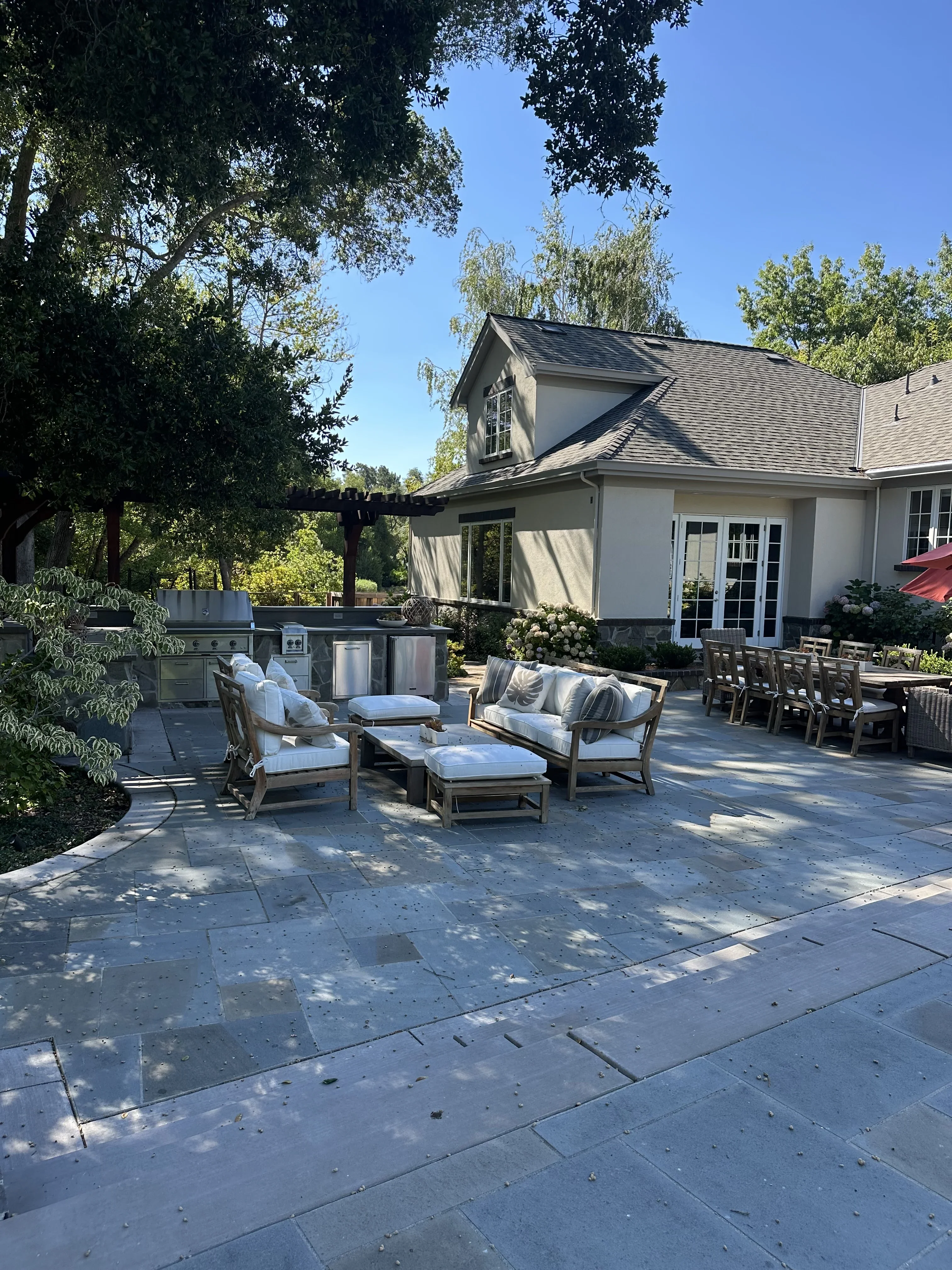
Why irrigation checks, drainage planning, grading, and water-wise updates are essential for long-lasting Contra Costa County landscapes.
Water can make or break a landscape. Too little water stresses plants and turf. Too much water can damage roots, stain hardscape, create muddy areas, and undermine the work that went into a new installation. In Contra Costa County, where dry summers and winter rains both matter, irrigation and drainage should be planned together.
Many homeowners think about irrigation only when plants look dry. Drainage often gets attention only after a storm. A better approach is to look at the whole property before problems become expensive.
Irrigation Should Match the Planting Plan
A new landscape should not rely on an old irrigation layout without inspection. Existing zones may have been designed for a previous lawn, older planting beds, or shrubs that no longer exist. When the plant palette changes, the watering strategy should change with it.
Low-water shrubs, new sod, vegetable boxes, and shaded beds do not all want the same schedule. Grouping plants by water needs helps prevent the common problem of overwatering one area to keep another alive.
Drip irrigation can be useful in planting beds because it delivers water close to the root zone. Spray irrigation may still have a place for turf or specific areas, but overspray onto sidewalks and driveways wastes water and can make the property look poorly maintained.
Small Failures Become Big Problems in Summer
A clogged emitter, broken head, or poorly aimed spray pattern can go unnoticed when the weather is mild. During a hot East Bay week, that same issue can quickly show up as wilting, brown patches, or plant loss.
Routine irrigation checks are especially important after installation, after planting changes, and before summer. The system should be tested while someone is watching it run, not just assumed to be working because the controller turns on.
Drainage Starts With Grading
Drainage is not only about adding drains. The shape of the ground matters. Water should move away from structures, avoid pooling in planting beds, and exit the yard in a controlled way. Poor grading can make even a well-installed drain system work harder than it should.
For hardscape areas, drainage planning is just as important. Patios, paths, stone work, and decks should be integrated with the way water moves through the property. Otherwise, runoff can collect where people walk or where plants cannot tolerate saturated soil.
Watch the Transition Between Hardscape and Planting
Many water issues show up where hardscape meets planting. A path may shed water into a bed. A downspout may flood a low spot. A driveway edge may collect runoff that pushes mulch into the street. These transition zones deserve attention during design and maintenance.
Good details are often quiet. A slight grade change, a better outlet, a corrected irrigation head, or a small drainage improvement may not be the most visible part of the project, but it can determine how well the landscape holds up.
Upgrade Before Replanting
If a planting area has failed more than once, do not simply replace the plants. Look at water first. The issue may be irrigation coverage, soil saturation, poor drainage, reflected heat, or a combination of factors. Replanting without solving the cause can repeat the same failure.
This is especially true for front yards, slopes, narrow side yards, and beds near pavement. These areas can have difficult sun, heat, and water patterns.
Build for Long-Term Maintenance
The best irrigation and drainage systems are serviceable. Valves, emitters, heads, cleanouts, and controllers should be accessible. Planting should not bury the parts of the system that need inspection. Maintenance crews should be able to identify issues before the landscape suffers.
For Contra Costa County landscapes, water management is not a background detail. It is part of the design. When irrigation, drainage, grading, planting, and maintenance work together, the yard has a much better chance of staying healthy through both dry months and rainy seasons.